 English
 Français
 Deutsch
 Italiano
 Español
Mongolia Motorcycle Tour: A Day-by-Day Guide to 9 Days on the Steppe
Day-by-day guide to a 9-day Mongolia motorcycle tour: 1,530 km from Ulaanbaatar via Kharkhorin, the Orkhon Valley and Terelj. Terrain, bikes and tips.
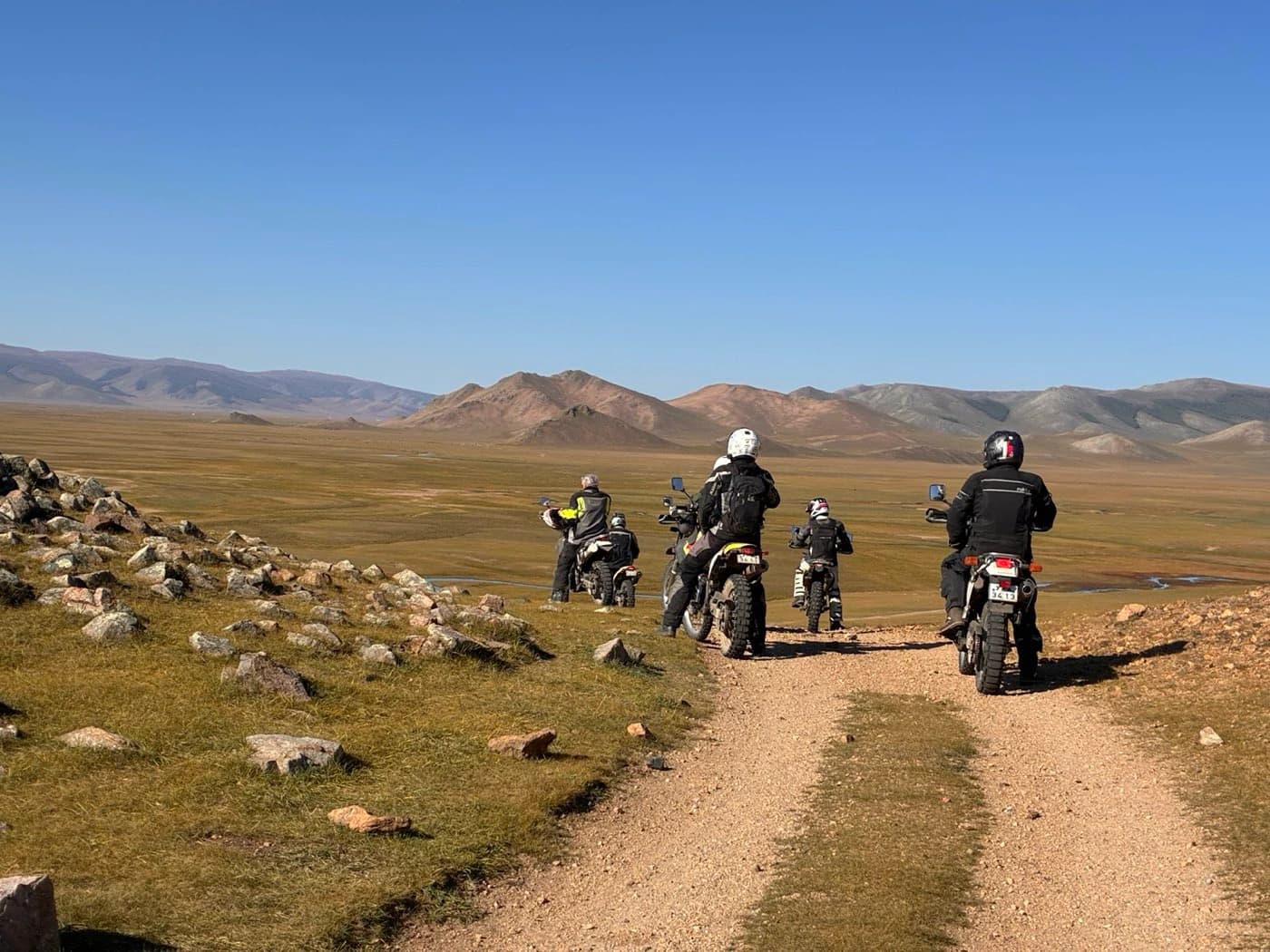
A Mongolia motorcycle tour is nine days and about 1,530 km of gravel, dirt track and open grassland, starting and ending in Ulaanbaatar. This guide walks through our route one day at a time, so you know what the riding is like, where you sleep and what you will see before you book.
The short version: seven riding days and two rest days, on a Suzuki DR-Z400S or DR650S, through Khustain Nuruu, Kharkhorin, the Orkhon Valley, the Ongiin River, Khogno Khan and Terelj. Nights are in ger camps and countryside lodges. A guide, a mechanic and a support truck travel with every group. The season runs from June to September.
Mongolia motorcycle tour at a glance
Duration: 9 days and 8 nights
Distance: about 1,530 km
Start and finish: Ulaanbaatar
Motorcycle: Suzuki DR-Z400S or Suzuki DR650S
Terrain: asphalt, gravel, dirt tracks and off-road sections
Level: intermediate. Not suitable for beginners
Group size: maximum 10 riders
Season: June to September, with days around 25°C and nights near 10°C
Sleeping: ger camps and countryside lodges
Support: Offhorizon guide, mechanic and support truck with spares
Full inclusions and the current price are on the Mongolia Motorcycle Tour page. Everything we run in the country is on our Mongolia destination page.
Why ride Mongolia on a motorcycle?
Mongolia is one of the least crowded countries on earth, and once you leave Ulaanbaatar the tarmac mostly ends. What replaces it is a set of tracks running roughly the same way across the grass. Choosing between them is part of the day's work, and it is the reason riders come here.
The central route suits a first trip because it packs a lot of change into nine days. You start in green river valleys, drop south into dry steppe and semi-desert, cross a strip of sand dunes and finish among granite hills and larch forest. Along the way there are wild horses, a 16th-century monastery, a waterfall cut into a lava canyon and the ruins of a monastery town on the edge of the Gobi.
Day 1: Ulaanbaatar to Khustain Nuruu
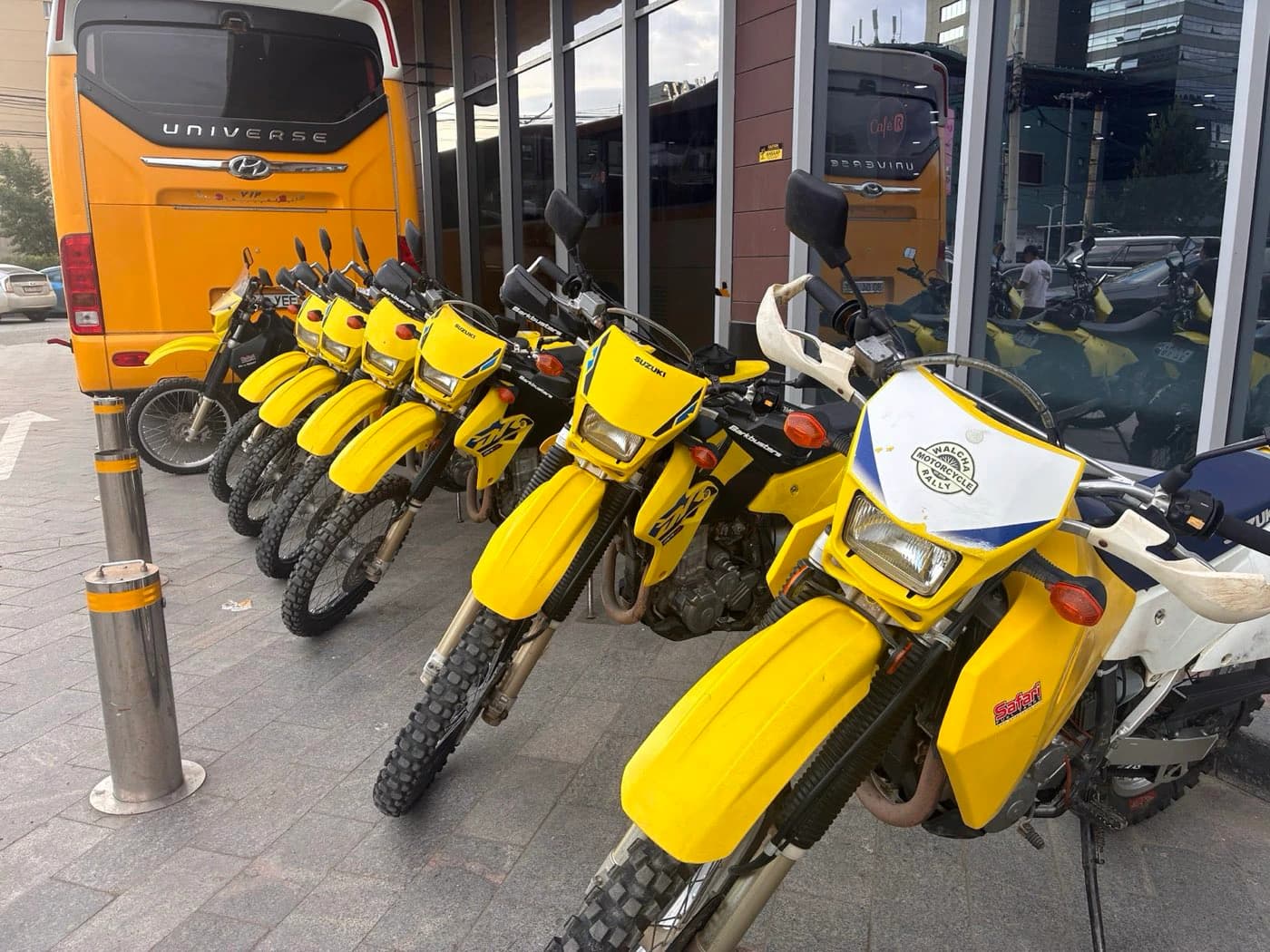
The first day is short on purpose. After a briefing and time to get used to the motorcycle, you ride west out of the capital to Khustain Nuruu, also written Hustai National Park. It lies roughly 100 km south-west of Ulaanbaatar, so there is time to settle into the bike before the surfaces get rougher.
Khustain Nuruu is known for one animal: the takhi, or Przewalski's horse, the last truly wild horse. It died out in the wild in the 20th century and survived only in zoos. In 1992 the first group of fifteen horses was flown back and released here. More than 350 now live in the park. The herds come down to drink in the early evening, which is the best time to look for them.
Night: Hustain Ger Camp.
Day 2: Khustain Nuruu to Kharkhorin
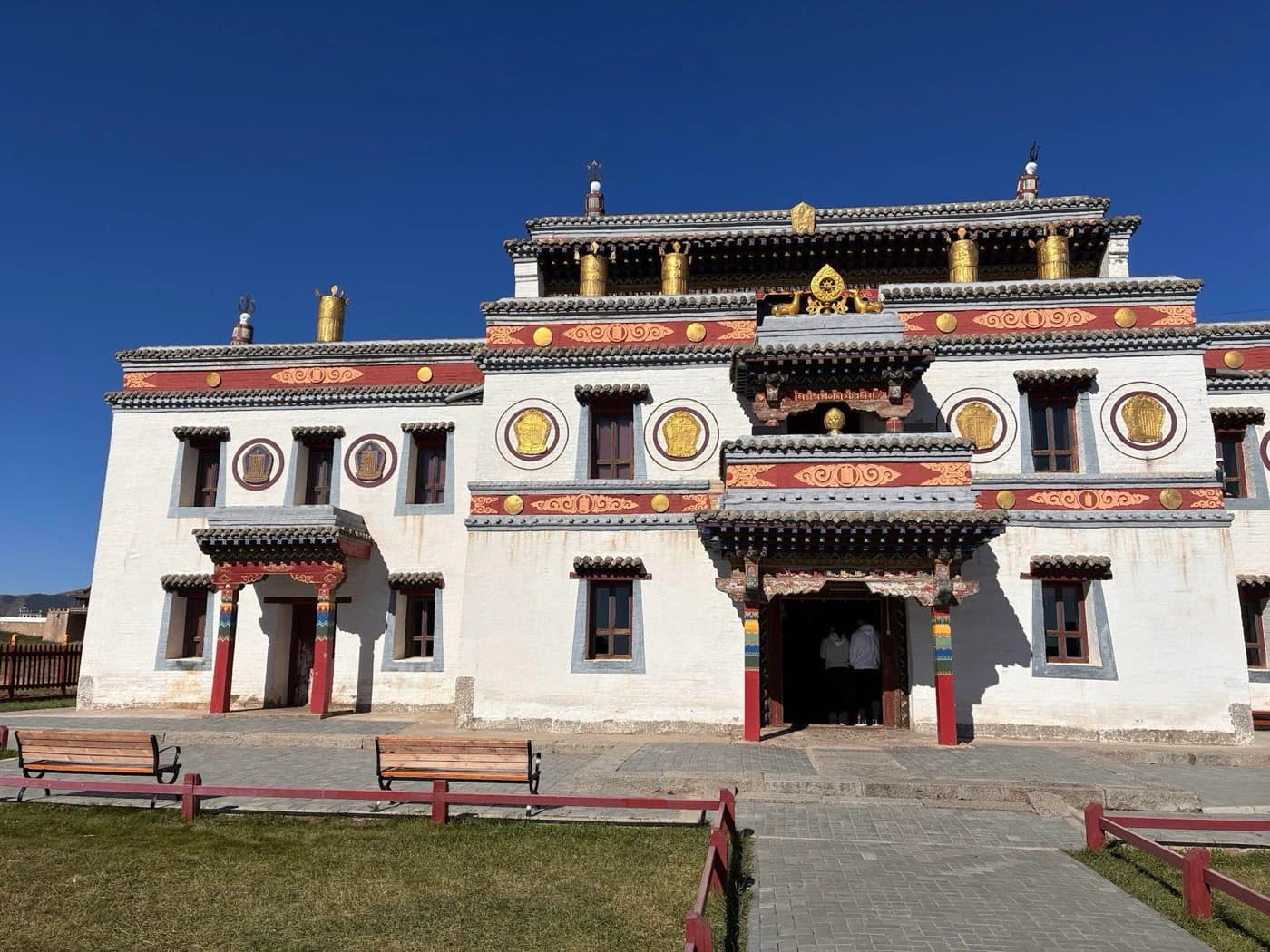
Day two takes you to Kharkhorin, the site of Karakorum, capital of the Mongol Empire in the 13th century. Very little of the old city is left above ground, but what stands beside it is worth the ride.
Erdene Zuu was founded in 1585 and is regarded as the oldest surviving Buddhist monastery in Mongolia. It sits inside a square wall lined with white stupas, and parts of it were built with stone taken from the ruined capital. If time allows, the group stops to walk around it.
This is also the day you start to learn Mongolian tracks. The surface changes every few kilometres, from broken asphalt to hard-packed dirt to loose gravel, and you get used to reading it ahead of the front wheel.
Night: Munkhtenger Ger Camp, Kharkhorin.
Day 3: Kharkhorin to the Orkhon Valley
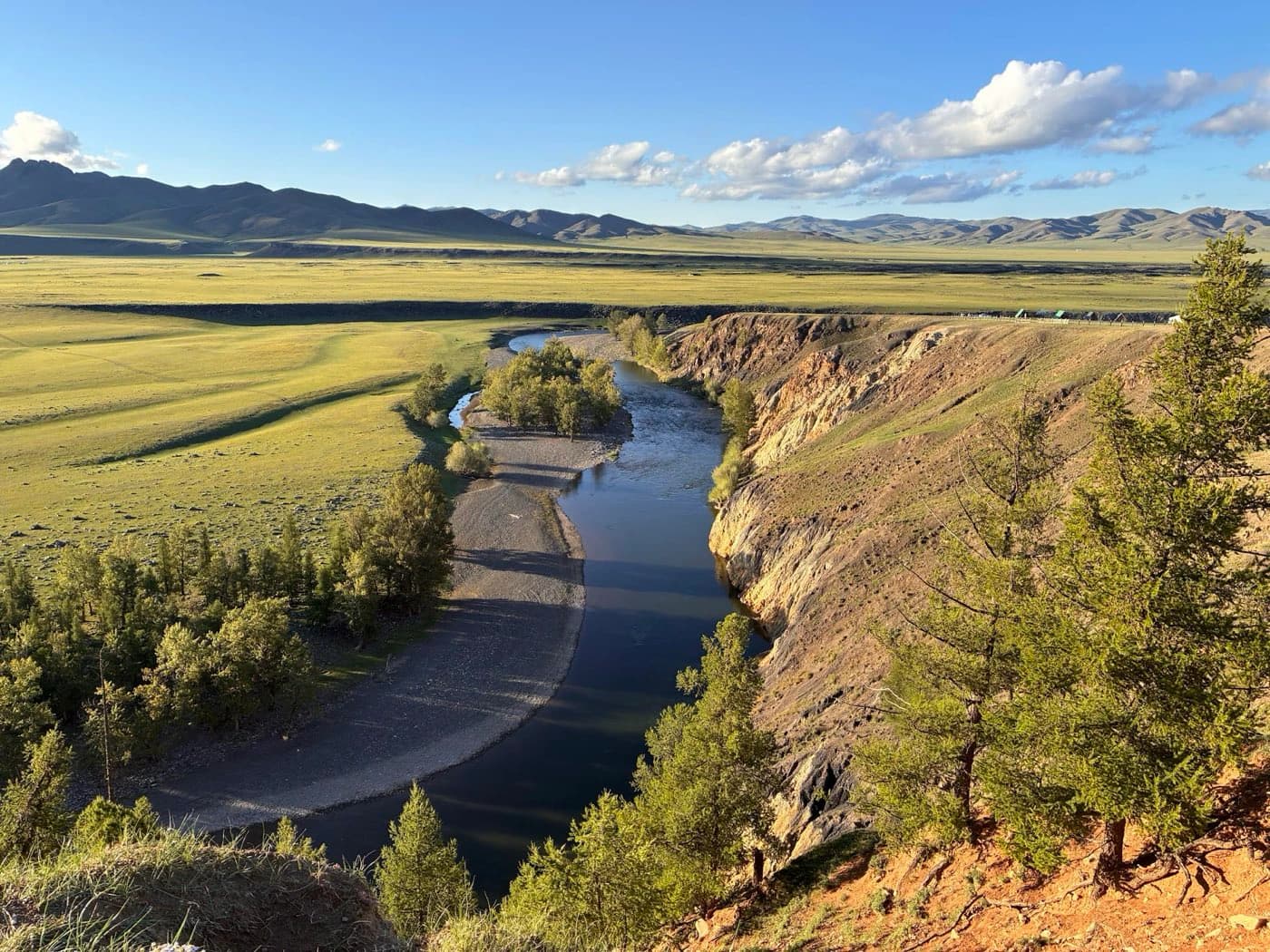
From Kharkhorin the route follows the Orkhon River upstream into the Orkhon Valley. UNESCO listed the valley as a World Heritage cultural landscape in 2004, for more than two thousand years of nomadic herding along the river and for its place at the centre of the Mongol Empire.
The riding gets more interesting here. The valley floor is old lava, so the tracks run over black rock, through shallow streams and across wide meadows where herds of horses and yaks graze. Expect water crossings. How deep they are depends on the rain in the days before you arrive.
Night: Khurkheree Camp, Orkhon Valley.
Day 4: Rest day in the Orkhon Valley
The first rest day comes when you need it. You can leave the motorcycle parked or take a short ride without luggage.
The main sight is the Orkhon Waterfall, known locally as Ulaan Tsutgalan. The river drops about 20 metres into a narrow basalt gorge, and a path leads down to the pool at the bottom. The side valleys are good for walking, and where it can be arranged, the group visits a nomadic family. That usually means a bowl of salty milk tea, dried curd and a look inside a working ger.
Day 5: Orkhon Valley to the Ongiin River
This is the first of three long days, each 300 km or more. You leave the green valley and ride south, and the country dries out as you go. Grass gives way to gravel plains and low scrub, the sky gets bigger, and gers become rare.
The day ends at the Ongiin River, where the ruins of Ongiin Monastery spread across both banks. It was founded in 1660 and grew into one of the largest monastic centres in Mongolia, home to more than a thousand monks. In 1939 it was destroyed in the anti-religious purges. A small temple was rebuilt and opened in 2004, and you can walk through the broken walls on the hillside above the camp.
Night: Secret of Ongiin River Camp.
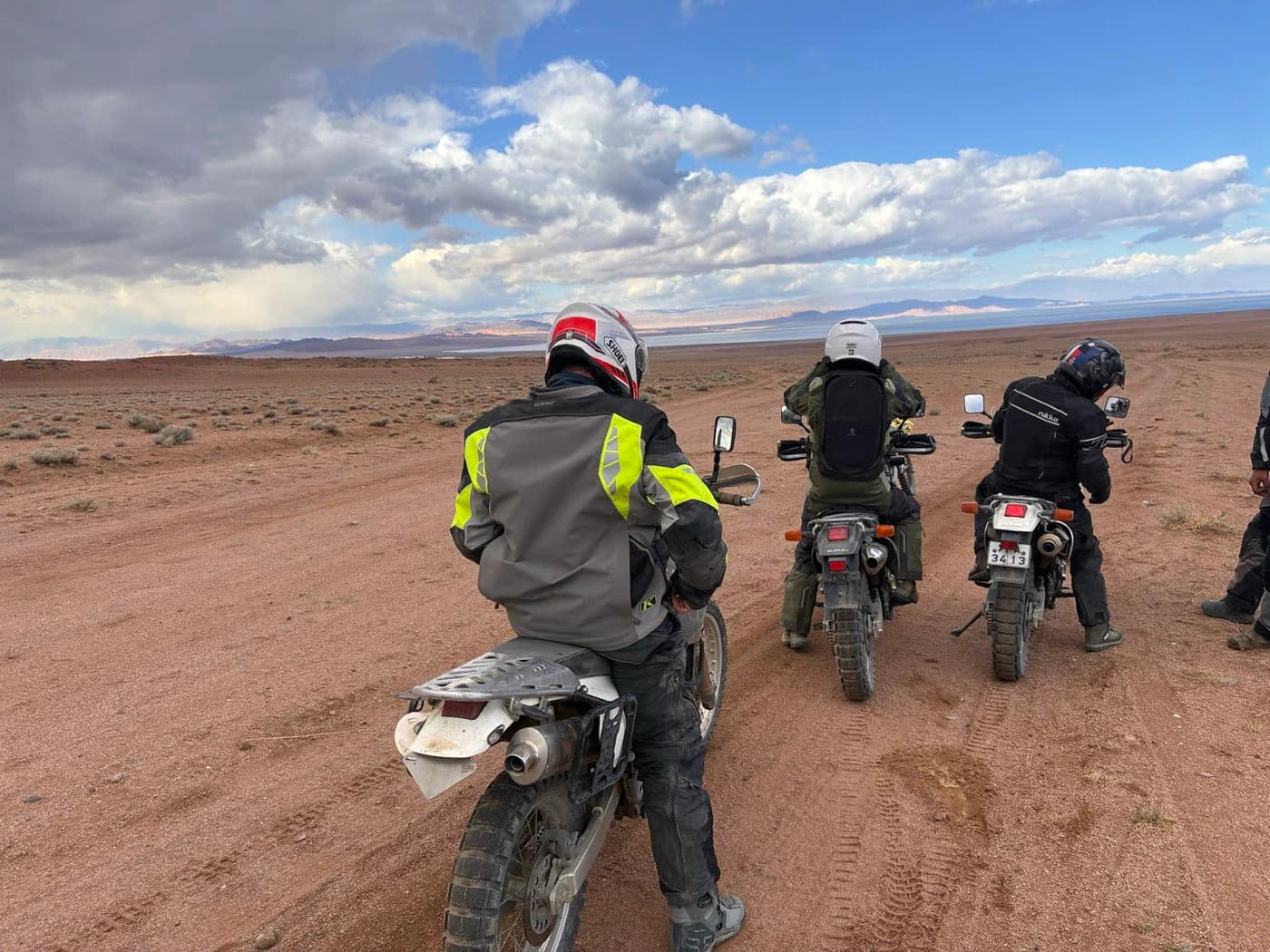
Day 6: Ongiin River to Khogno Khan
Another day of 300 km or more, this time heading back north. The surface is mostly dirt and gravel with sandy stretches, and there is little shade or shelter, so the group stops regularly for water and a rest.
Khogno Khan is a small protected area where three landscapes meet: a granite mountain, open steppe and a long ribbon of sand dunes called Elsen Tasarkhai. The dunes run for about 80 km and are often called the Mini Gobi. At the foot of the mountain is Ovgon Monastery, a 17th-century site linked to Zanabazar, the first Buddhist leader of Mongolia.
Night: Khogno Khan Camp.
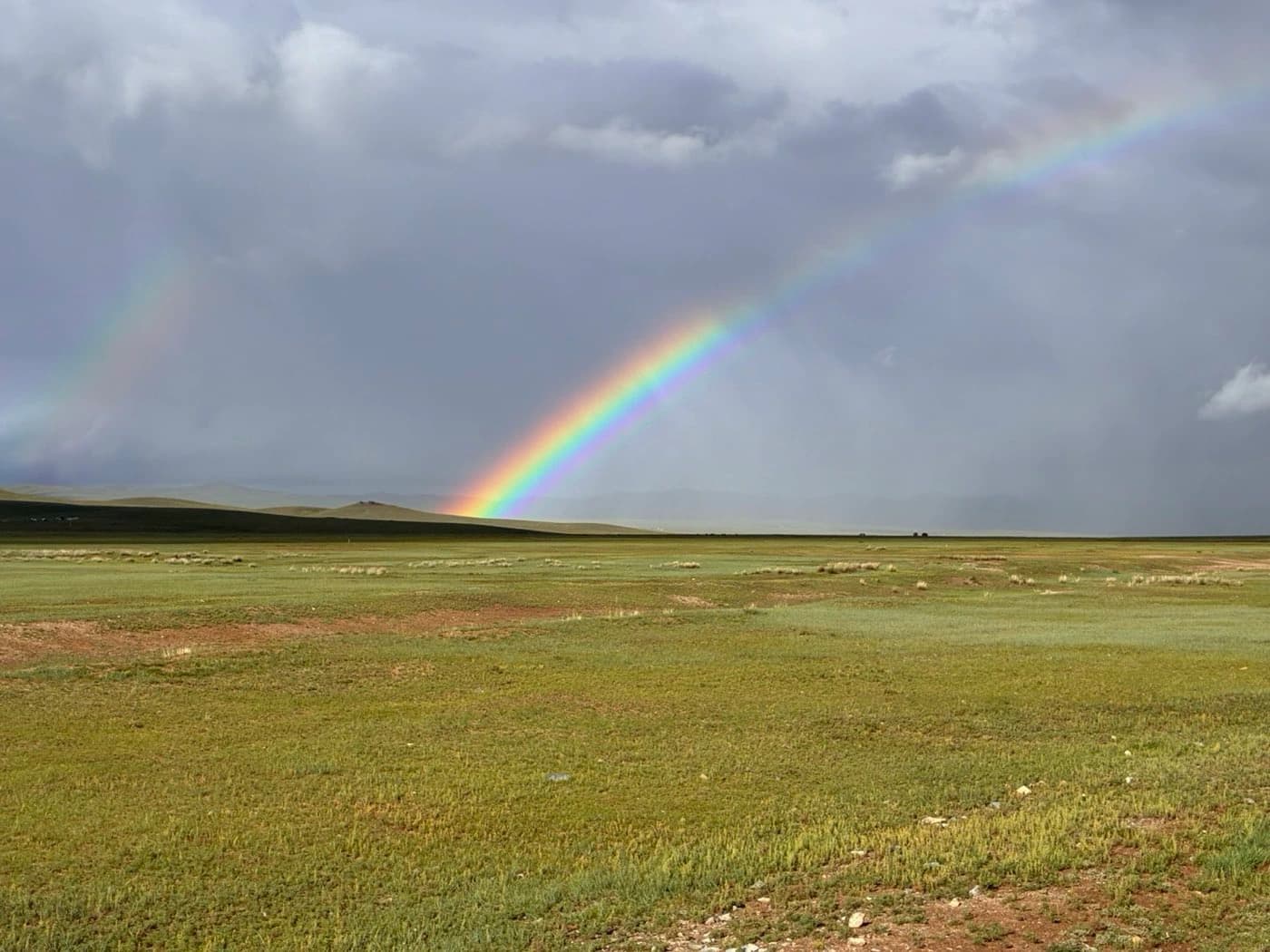
Day 7: Khogno Khan to Terelj National Park
Day seven is the longest of the tour: about 330 km and nine to ten hours in the saddle. It crosses the country from west of the capital to the hills east of it, on a mix of asphalt and track.
Start early, eat properly at lunch and keep your pace steady. Long days go wrong when riders push in the last hour. By evening the steppe has turned into granite outcrops and larch forest, and you ride into Gorkhi-Terelj National Park, about 65 km north-east of Ulaanbaatar.
Night: Terelj Mountain Lodge.
Day 8: Rest day in Terelj
The second rest day is for stretching your legs. Turtle Rock is a 24-metre granite formation that looks like its name from the right angle. A short walk further up the valley is Ariyabal Meditation Temple, reached by a long flight of steps with a wide view over the park from the top.
Horse riding and short hikes are easy to arrange from the lodge. So is doing nothing at all, which most riders choose after Day 7.
Day 9: Terelj to Ulaanbaatar
The last ride is a short one back to the capital, with one stop on the way. The Chinggis Khaan Equestrian Statue at Tsonjin Boldog is 40 metres of stainless steel and the largest equestrian statue in the world. A lift and stairs take you up to a viewing platform on the horse's head.
The expedition ends in Ulaanbaatar, where the motorcycles are handed back and the deposit is settled.
What is the riding like?
The route is a mix of asphalt, gravel, dirt tracks and off-road sections. None of it is technical in the enduro sense, but it is loose, changeable and long. You should be comfortable standing on the pegs, riding in sand ruts and picking the motorcycle up if it goes over.
Three things catch riders out:
Distance. Days 5, 6 and 7 are each 300 km or more on rough surfaces. That is harder than the same distance on tarmac.
Corrugations and sand. Washboard tracks shake the bike and the rider. Sandy stretches need a light grip and steady throttle.
Water. River crossings change with the weather. The guide decides whether a crossing is safe and can change the route if it is not.
Distances and riding times are approximate for that reason. Weather, road conditions and the pace of the group all move them.
Which motorcycle will you ride?
You ride a Suzuki DR-Z400S or a Suzuki DR650S. The DR-Z400S is light and agile, and it is the easier bike on gravel and sand. The DR650S is a proven long-distance machine and more comfortable over a full day in the saddle.
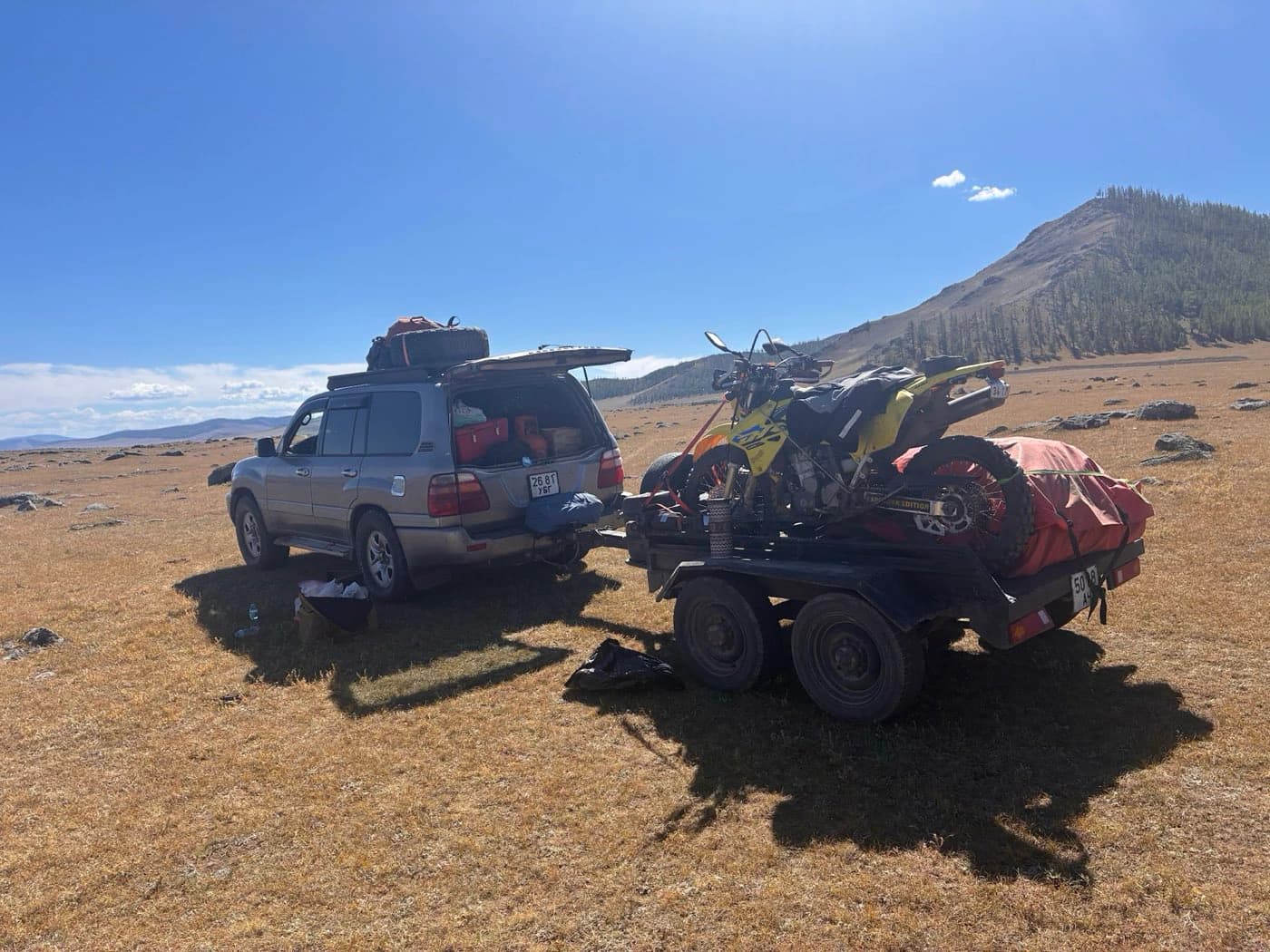
Workshops are scarce outside the capital. That is why a mechanic travels with the group and a support truck follows with spares.
Where do you sleep and eat?
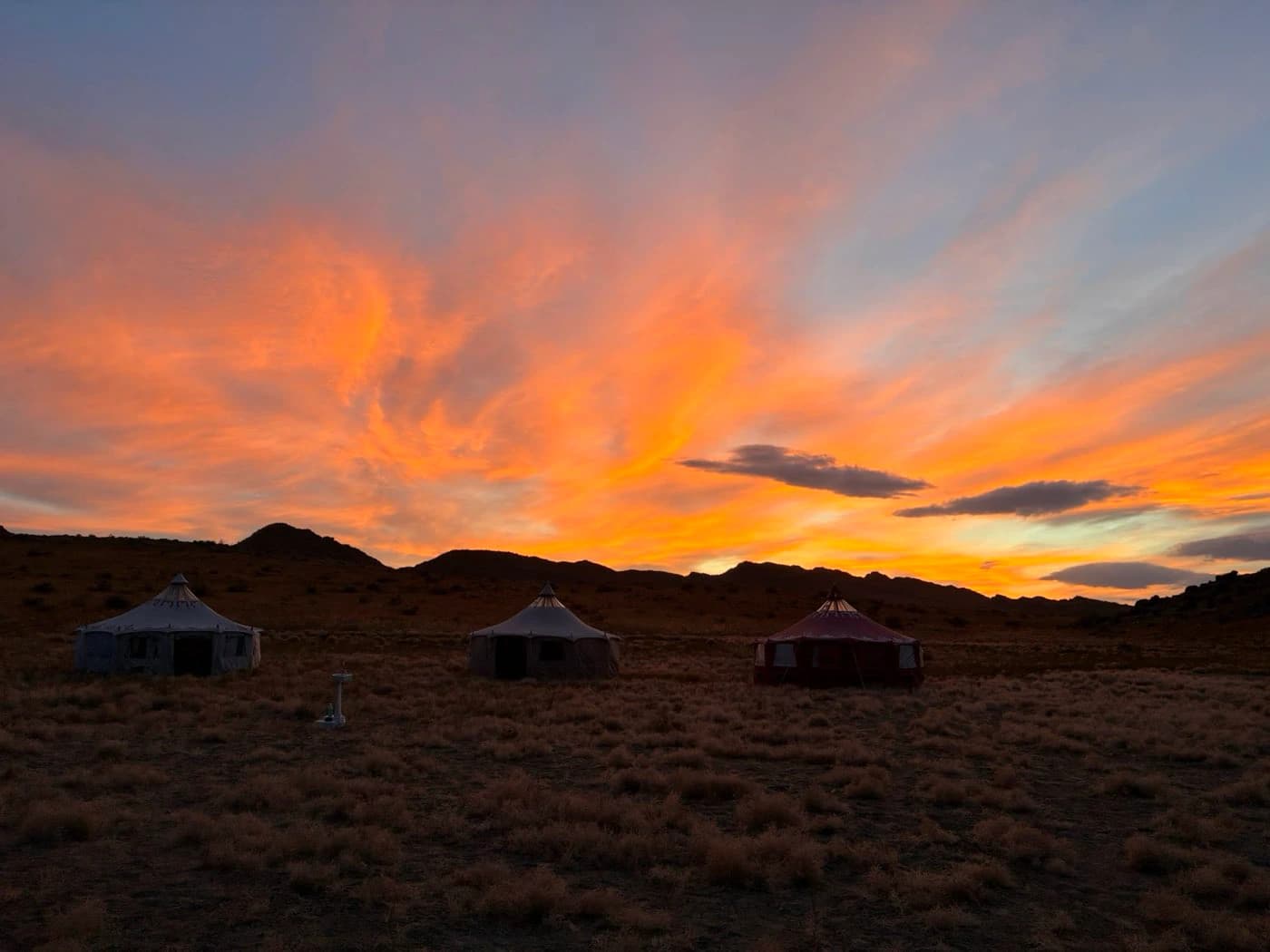
Eight nights are spent in ger camps and countryside lodges. A ger is the round felt tent Mongolian families live in. The camps on this route are set up for travellers, so you get a real bed rather than a sleeping mat.
Outside Ulaanbaatar, breakfast, lunch and dinner are included. Expect mutton and beef, noodles, dumplings and soup, with bread and dairy at most meals. Tell us about dietary needs before you travel, because choices in the countryside are limited.
When is the best time to go?
June to September. Outside those months the nights get very cold and the riding season is over.
June: green and fresh, with cool nights and fewer visitors.
July: the warmest month, and the month of the Naadam festival in mid-July. Expect some rain and busier camps.
August: warm days and the grass at its tallest. Rivers can run high after rain.
September: clear, dry and cold at night, with autumn colour in the valleys.
On this route, plan for days around 25°C and nights near 10°C, and pack for both in the same day.
What should you pack?
Adventure or enduro helmet, with goggles or a visor that seals against dust
Armoured jacket and trousers with vents, plus a waterproof layer
Proper off-road or adventure boots
Two pairs of gloves, one light and one warm
Warm mid-layer for evenings in camp
Hydration pack
Sunscreen, lip balm and sunglasses
Power bank and a head torch
Personal medicines and a small first-aid kit
Bring your own riding gear unless you have agreed otherwise with us in advance.
Documents, deposit and practical points
Licence: a valid motorcycle licence for the machine you are riding, and an International Driving Permit where it applies.
Visa: requirements depend on your passport. Check the current rules for your country before you book flights.
Insurance: travel insurance is not included, and it should cover motorcycle riding off tarmac.
Deposit: a security deposit of USD 500 per motorcycle is taken in cash at the start. The motorcycles are insured, but the cover is limited and damage you cause is charged to you.
Not included: international flights, and hotel nights and dinners in Ulaanbaatar before and after the expedition.
Mongolia motorcycle tour FAQs
How difficult is a Mongolia motorcycle tour?
It is an intermediate tour. Most of the route is gravel and dirt track, with some asphalt and some off-road sections. Three riding days are 300 km or more, and the longest is nine to ten hours in the saddle.
Do I need off-road experience?
You should be comfortable on gravel and dirt. You do not need to be an enduro rider, but this is not a tour for someone who has only ridden on tarmac.
How many kilometres do we ride each day?
The total is about 1,530 km over seven riding days. The first days are shorter. Days 5, 6 and 7 are the long ones, at 300 km or more each.
Is there a support vehicle?
Yes. A support truck follows the group with spares, and a mechanic is with you for the whole expedition.
Is fuel included?
Yes. Fuel for the whole planned route is included.
How big is the group?
A maximum of 10 riders, so the crew can look after everyone and the group can keep a sensible pace.
What happens if the weather turns?
The guide changes the route or the day's schedule. Safety comes before the plan.
Plan your ride with Offhorizon
If this is the kind of riding you have been looking for, the next step is simple. See the full itinerary, inclusions and current price on the Mongolia Motorcycle Tour page, check open departures on the tour calendar, or send us an enquiry with the dates you have in mind.
Prefer four wheels? We also run Mongolia as a 4x4 self-drive expedition. More route guides are in our journal.