 English
 Français
 Deutsch
 Italiano
 Español
Spiti Valley in Winter: Roads, Snow and What to Expect
Spiti Valley in winter is open only via Shimla and Kinnaur. Our Manali team explains the route, roads, snow months, cold, stays and what to pack.
Spiti Valley in winter is open, but only from one side. From roughly October to May, the Manali road over Kunzum La is shut by snow, so the only way in is from Shimla, up through Kinnaur to Kaza and back the same way. We run this trip every winter from our base in Manali. This guide covers what the route is actually like, when the snow comes, how the stays work when the water freezes, and what you and your car need before you go.
Quick Answer
Yes, Spiti Valley is open in winter, but only via Shimla and Kinnaur. The Manali side, Kunzum La and Chandratal stay closed from about October to May. Snow is most likely from December to February, sometimes into March. Expect packed snow, black ice and freezing nights.
Is Spiti Valley Open in Winter?
It is. Spiti does not shut down in winter. People stay, the monasteries stay open, and the road in from Kinnaur keeps running. What closes is the other door.
Why You Cannot Go via Manali in Winter
In summer, Spiti is a loop. You can drive in from Shimla through Kinnaur and leave over Kunzum La towards Manali, or do it the other way round. That loop only exists for three to four months of the year.
Once the snow sets in, Kunzum La closes. So does the road to Chandratal, and the high stretch between Losar and the Manali side. These roads stay buried for most of the year and only open again in the short summer window. From about October to May, if you want to reach Spiti, you go via Shimla. There is no shortcut, and nobody sensible tries to find one.
The Shimla and Kinnaur Route
The winter route follows the old Hindustan Tibet Road up the Sutlej valley through Kinnaur, then turns into Spiti and runs up to Kaza. This road stays open through the winter, although it can close for a day or two after heavy snow or a rockfall while it is cleared.
Because Kaza is the end of the line in winter, the trip is an out and back. You drive up from Shimla, spend your days around Kaza, and come back down through Kinnaur. It is less repetitive than it sounds, because you stop at different places on the way back.
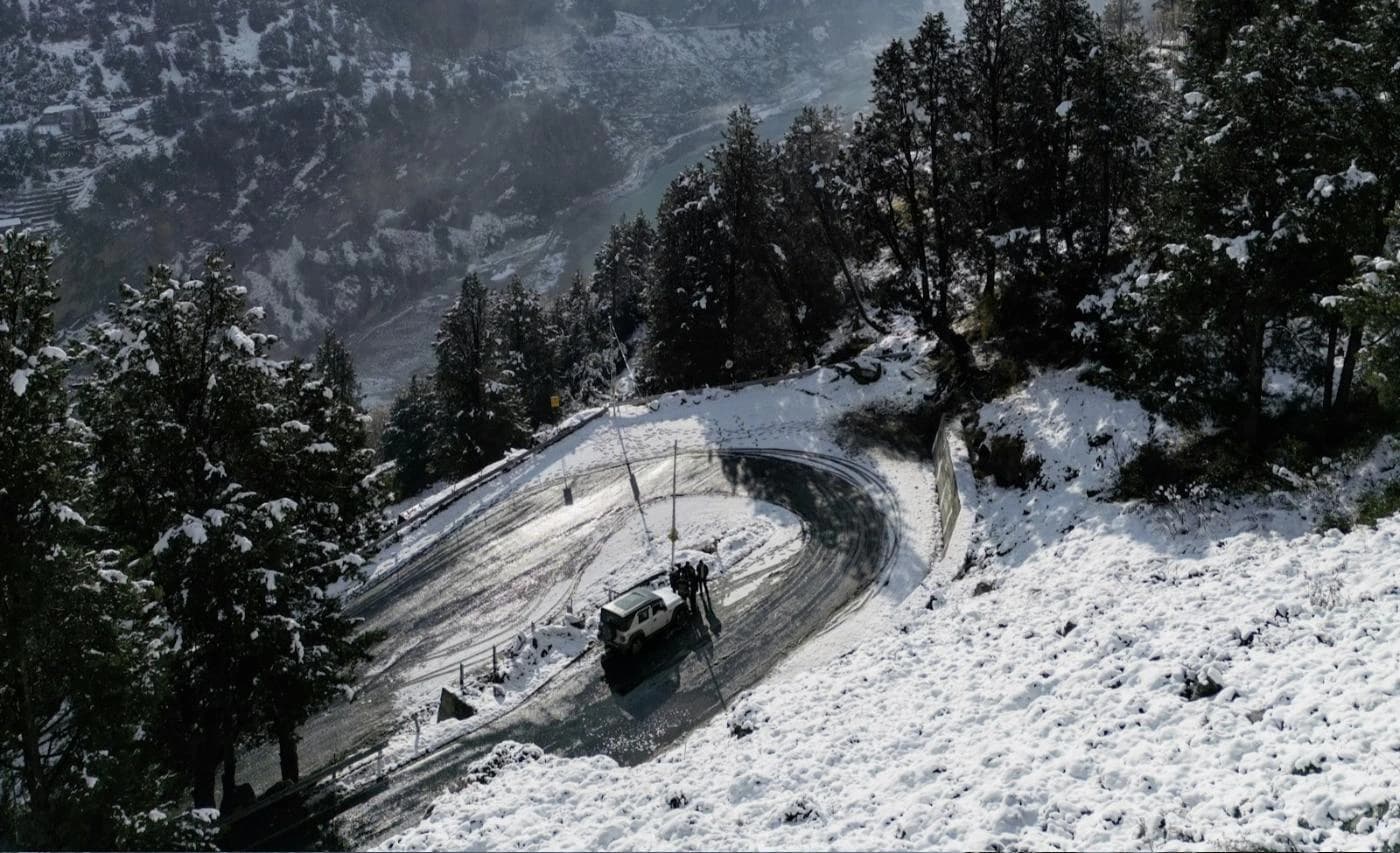
Photo: Ashwini Chaudhary on Unsplash
Starting from Manali
We are based in Manali, so we also start winter trips from here as well as from Shimla. In winter that still means heading down to the Shimla side first and entering Spiti through Kinnaur. You cannot cut across. If you are already in Manali, or want to spend a few snowy days there first, just tell us and we will plan the start around it.
How Our Winter Spiti Route Works
This is the shape of the route we drive. The full day plan, dates and what is included are on the Winter Spiti Self Drive Expedition page.
- 1.
Shimla to Sangla. Into Kinnaur along the Sutlej. We only go on to Chitkul if the road is open that day.
- 2.
Sangla to Tabo. The long climb into Spiti. Tabo's monastery was founded in 996 CE, and in winter it is very quiet.
- 3.
Tabo to Kaza via Pin Valley. Pin Valley is snow leopard country and one of the most beautiful stretches in winter.
- 4.
Around Kaza. Hikkim, Komic and Langza, the high villages above town.
- 5.
Key, Kibber and Chicham Bridge. Key Monastery on its hill, Kibber village, and Chicham Bridge at 4,145 m.
- 6.
Back down to Kalpa and on to Shimla. Kalpa looks straight across at the Kinner Kailash range, and it makes a good stop on the way home.
The order is deliberate. You climb slowly, sleep a little higher each night, and your body gets time to adjust before you reach Kaza.
When Is There Snow in Spiti? Month by Month
Snow in Spiti is not something you can book. What we can tell you is what we usually see.
Photo: Ashwini Chaudhary on Unsplash
October and November
The Manali side closes during this period, and the valley turns cold and dry. There can be early snow on the passes and the high villages, but most years the valley floor is brown and gold, not white. It is a good time if you want the cold and the quiet without heavy snow on the roads.
December
The real winter starts. We mostly see snow from December onwards, and it can come in heavy spells. Nights get very cold and the rivers start freezing at the edges. The first proper snowfall can change the whole look of the valley overnight.
January
January is usually the deepest part of winter. It is the coldest month, and it often brings the most snow. The villages above Kaza can be completely white. This is also the month when roads are most likely to close for a day while they are cleared, so a spare day matters most now.
February
February is still full winter, with regular snow and very cold nights. The days start getting slightly longer and the sun has a bit more strength, which makes the afternoons easier. For many people this is the most comfortable balance of snow and daylight.
March
Snow still comes sometimes in March, but it is less regular. The lower valley starts to melt in the afternoons while the high villages often keep their snow. If you want to see a white Spiti, March can still work, but December to February gives you a better chance.
What Are the Roads Like in Winter?
The main road through Kinnaur is mostly tarmac, but in winter that tarmac is often hidden. Here is what you actually drive on.
Packed snow. On the roads up to the high villages like Langza, Komic and Kibber, you are often driving on snow that has been pressed down by traffic. It is grippy when it is cold and dry, and slippery when the sun softens it.
Black ice. This is the one that catches people out. Water runs across the road during the day and freezes at night into a thin, clear layer that looks like wet tarmac. It is worst in the shade and in the early morning.
Frozen water crossings and melt patches. Streams that cross the road can freeze into humps of ice.
Rockfall zones in Kinnaur. Parts of the Kinnaur road are cut into cliffs. After snow or rain, loose rock can come down. This is one reason the road sometimes shuts for a while.
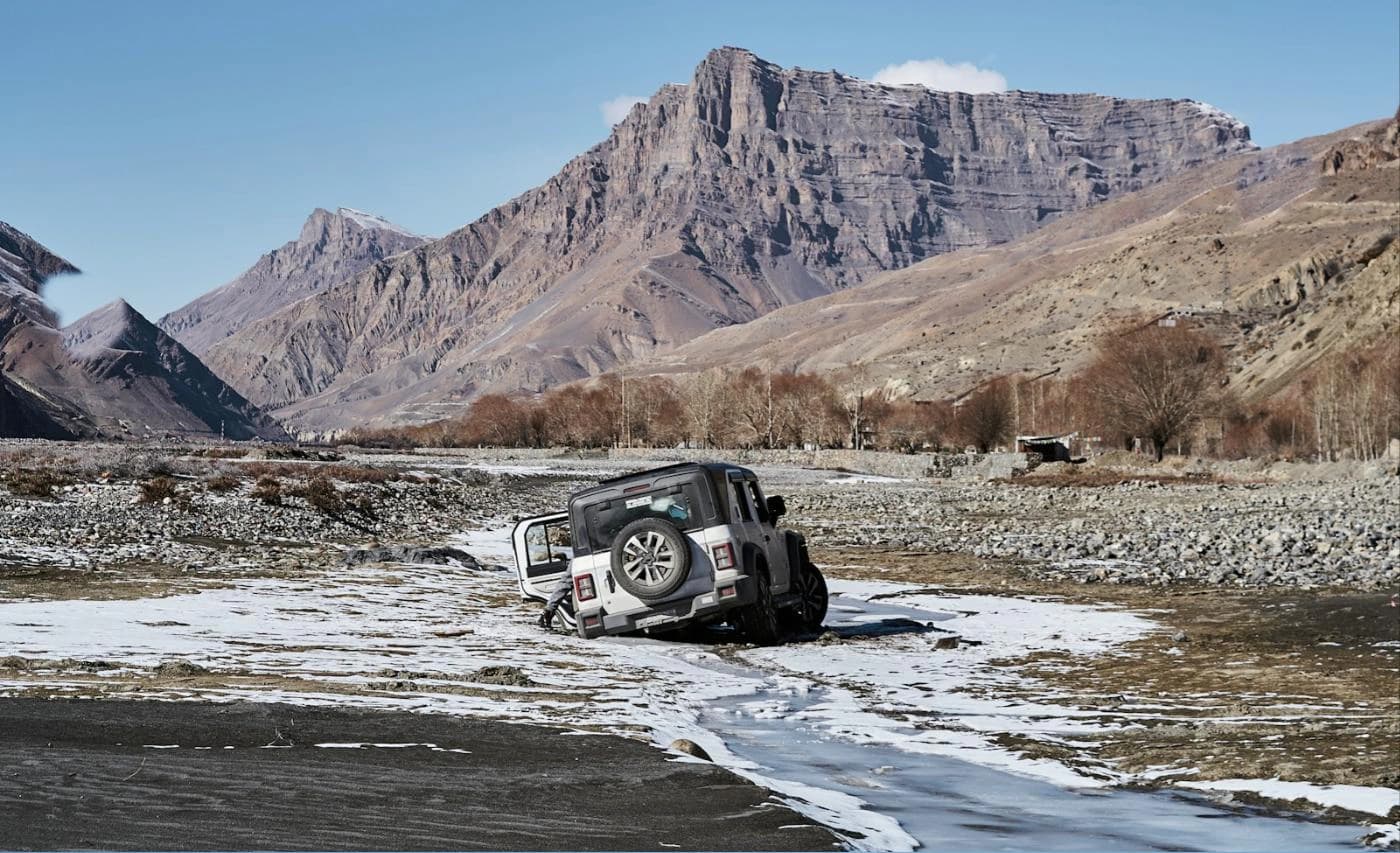
Photo: Ashwini Chaudhary on Unsplash
How we handle it is simple. We do not start too early, because the first hours of the day are the iciest. We fit chains before the difficult sections, not in the middle of them. And we never drive after dark. Once the sun goes down, everything that melted during the day freezes again, and you cannot see black ice with headlights.
What Can You See in Spiti in Winter?
More than people expect, as long as the roads have been cleared.
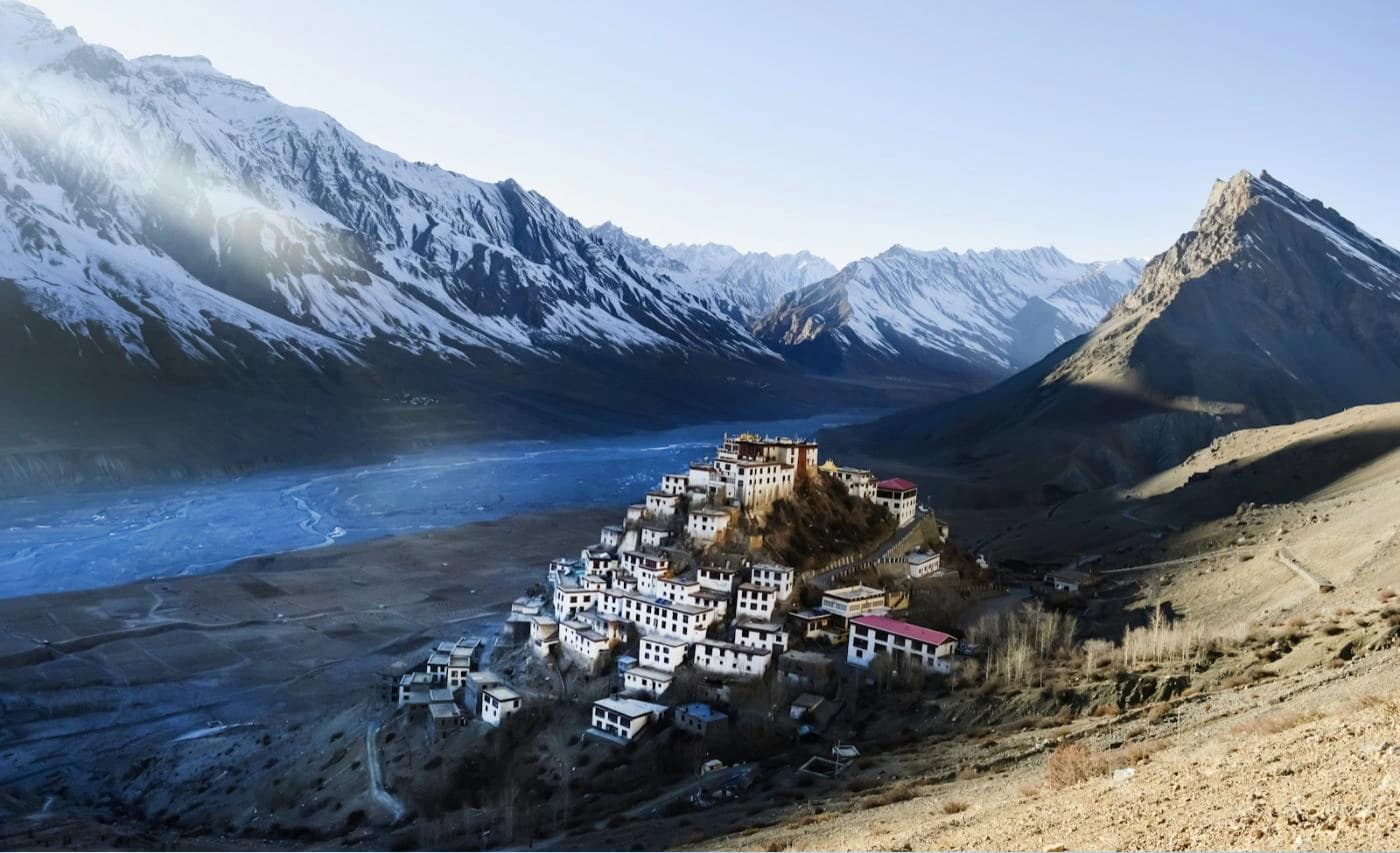
Photo: Shashank Rai on Unsplash
Kinnaur on the way in. Sangla, and Chitkul if the road allows. Bare apple orchards, wooden houses and snow on the peaks above.
Nako. A small village with a lake that often freezes in the coldest months.
Tabo. The old monastery with its mud walls, very quiet in winter.
Pin Valley. Wide, white and empty. One of our favourite drives of the whole trip.
Kaza. The main town of Spiti and your base. Most of the valley's winter life runs from here.
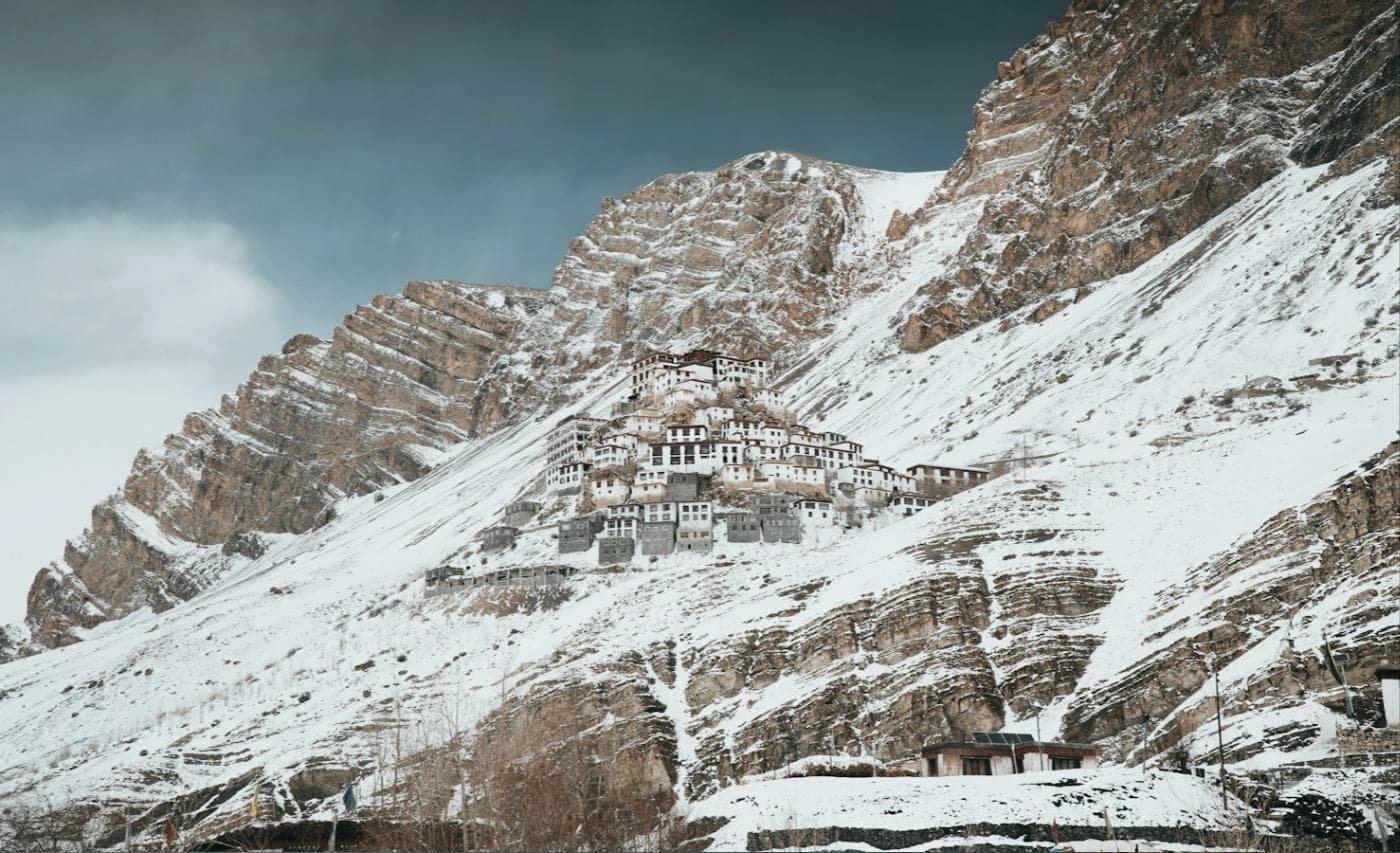
Key Monastery. On its hill above the Spiti river, it looks even sharper against snow.
Kibber and Chicham Bridge. High villages and the bridge over a very deep gorge.
Langza, Hikkim and Komic. The high villages above Kaza. Hikkim has one of the highest post offices in the world, and people still send postcards from it in winter.
What you will not see in winter is Chandratal or Kunzum La. Both are closed by snow. If those are on your list, you need a summer trip, like our Spiti Valley 4x4 Self-Drive Expedition.
Snow Leopards Around Kibber
Winter is when snow leopards come lower down, following the ibex and blue sheep. That is why the area around Kibber is known for sightings at this time of year. On our trip, a local spotter goes out with you in the Kibber area. They know the slopes and where animals were seen recently. We have to be honest, though. A sighting is never guaranteed. Some groups see one, some see only tracks, and some see nothing at all. Go for the chance, not for a promise.
Where Do You Stay and Eat?
This is the part of a winter Spiti trip that worries people most, so here is how it really works.
Heaters and Rooms
We stay in the main towns and villages along the way, where we can find proper rooms and heating. Where you need a heater, you get one. In homestays that often means a traditional stove in the main room, where everyone sits in the evening. It is the warmest place in the house, and usually the most sociable.
When the Water Freezes
In winter, the water in Spiti freezes completely. Pipes, taps and tanks can all be solid ice for weeks. This is normal, so we do things the local way. Water is stored and warmed on the stove. You get hot water in a bucket, not from a shower. Some homestays use traditional dry toilets in winter, because a flush system cannot work when everything is frozen. It takes a day to get used to, and after that most people are surprised how well it all works.
Food
Food in winter is simple and warm. Think dal, rice, rotis, vegetables, thukpa, momos and plenty of tea. Fresh vegetables are harder to get when the road is long and cold, so menus are shorter than in summer. Eat what the house is cooking. It is usually the freshest thing there is.
Power and Phone Signal
Expect power cuts, sometimes long ones after snowfall. Network is patchy and can drop out for hours. Keep a power bank charged, download your maps offline, and tell people at home that you may go quiet for a day or two.
What Does Your Car Need for Winter Spiti?
Most people on our winter trip drive their own 4x4 or hire a Jimny or Thar from us. Whatever you drive, the car needs to be ready for the cold.
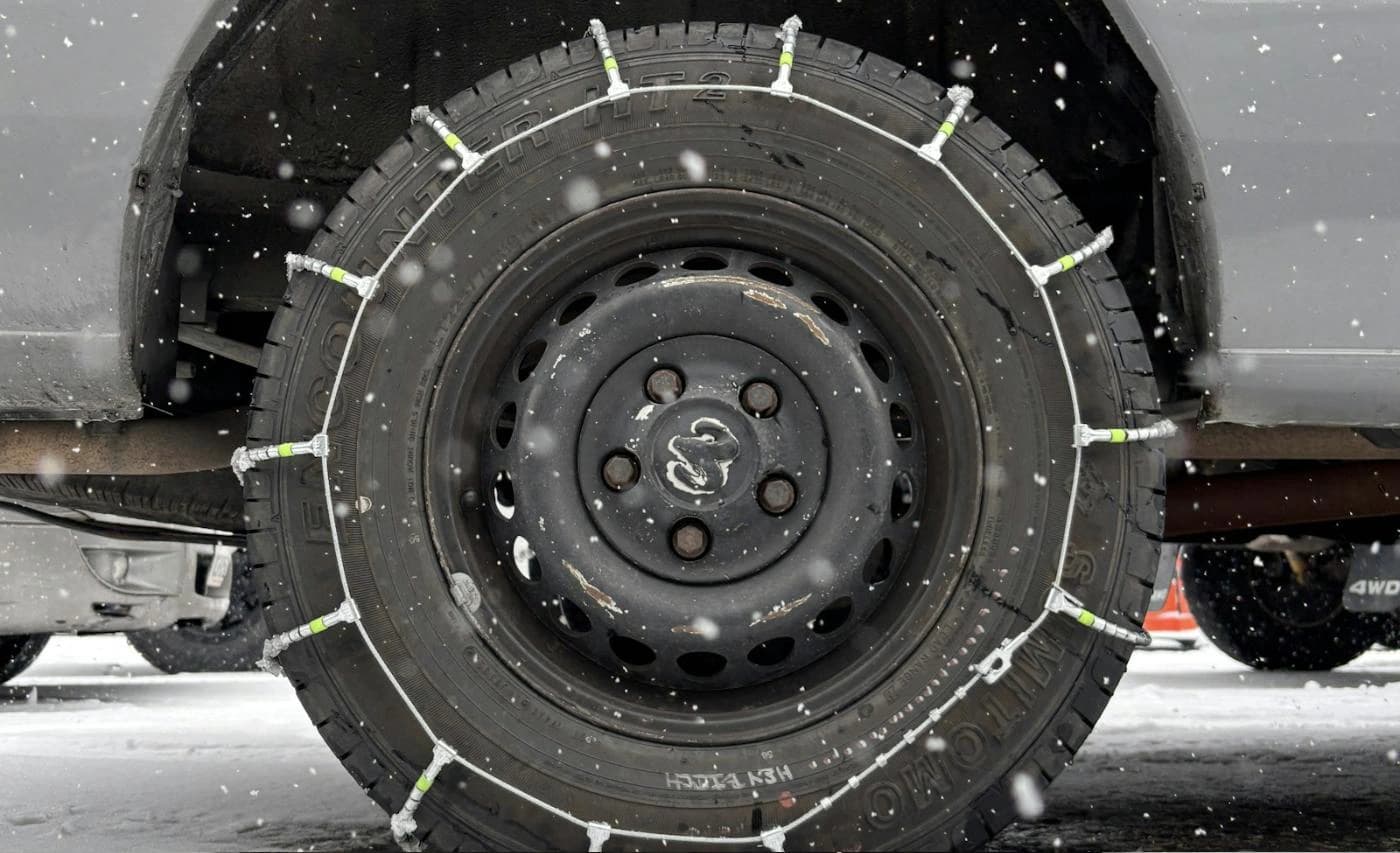
Photo: Jim Moriarty on Unsplash
Snow chains that fit your tyres. Practise fitting them once at home, not for the first time on ice.
Good tyres with deep tread. Worn tyres are the most common problem we see.
Winter grade diesel and antifreeze. Ordinary diesel can thicken in extreme cold. Fill up with winter grade fuel before you head high, and keep the coolant topped up with antifreeze.
A healthy battery. Cold mornings kill weak batteries.
Four wheel drive and ground clearance. A normal car can reach parts of Kinnaur in good conditions, but for the high villages you want a 4x4.
On our trip, the convoy runs with a lead car, a backup car, recovery gear and a radio in every vehicle, so you are never stuck alone on a cold road. Full details of what is covered are on the tour page.
How Cold Does It Get, and What Should You Pack?
Very cold. Days can be bright and even pleasant in the sun, but nights in Kaza drop far below freezing, and on the coldest nights it can reach around minus 25°C. The wind makes it feel colder still.
What to Pack
A heavy down jacket, not just a fleece
Two or three sets of thermal base layers
Insulated, waterproof boots with good grip
Woollen socks, plenty of them
Warm gloves plus a thin inner pair for fiddly jobs like fitting chains
A woollen cap, a buff or scarf, and sunglasses for the snow glare
Sunscreen and lip balm. The sun is strong at altitude even when it is freezing
A hot water bottle. It sounds old fashioned, but it makes the nights far easier
Power banks, a head torch and any regular medicines you take
Altitude
Kaza and the villages around it are high, and cold makes altitude harder on the body. Drink water through the day even when you do not feel thirsty, go slowly on the first days, and tell the crew early if you have a headache, feel sick or cannot sleep. Our route climbs gradually for exactly this reason, and oxygen is carried in the convoy.
Should You Drive Winter Spiti on Your Own?
You can, and some people do. But it helps to be honest about what it takes. You need a well prepared 4x4, experience on snow and ice, flexibility to wait out a closed road, and the ability to sort out problems where help may be hours away. A dead battery at dawn or a car sliding on black ice is a very different problem at minus 20°C than it is at home.
The most common mistakes we see are driving too early, pushing on after dark, running without chains, and planning no spare days. The people who enjoy winter Spiti most are the ones who are not in a hurry.
If you want to drive yourself but with a team around you, that is exactly what our Winter Spiti Self Drive Expedition is for. You drive your own car. We plan the route, lead the convoy, sort the stays and carry the recovery kit. Departure dates are on our tour calendar, and if you want to go with your own group on your own dates, we can build a private trip for you.
FAQs About Spiti Valley in Winter
Is Spiti Valley open in winter?
Yes. Spiti Valley stays open in winter, but only via Shimla and Kinnaur. The road from the Manali side over Kunzum La is closed by snow from about October to May, so winter trips go in and out through Kinnaur.
Can you go to Spiti via Manali in winter?
No. Kunzum La is closed in winter, so you cannot drive from Manali into Spiti. You can still start your trip in Manali, but you have to travel down to the Shimla side and enter Spiti through Kinnaur.
Is Chandratal open in winter?
No. The road to Chandratal is closed by snow in winter and only opens for a few months in summer. If Chandratal is important to you, plan a summer trip instead.
When is there snow in Spiti?
Snow is most likely in December, January and February. It sometimes continues into March, especially in the high villages. October and November are usually cold and dry, with snow mainly on the passes.
How cold is Kaza in winter?
Very cold. Days can feel mild in the sun, but nights drop far below freezing, and on the coldest nights Kaza can reach around minus 25°C. Pack proper down clothing and thermal layers.
Can a normal car go to Spiti in winter?
A normal car can manage parts of the Kinnaur road in good conditions, but it is not a good idea for the full trip. The high villages around Kaza often have packed snow and black ice, so a 4x4 with snow chains is the safer choice.
Is there running water in Spiti in winter?
Often not. Pipes and tanks freeze solid in the coldest months. Homestays store water and heat it on the stove, and you usually get hot water in a bucket. Some use traditional dry toilets in winter.
Cover photo: Tarun Hirapara on Unsplash