 English
 Français
 Deutsch
 Italiano
 Español
How much riding experience do you need for Ladakh and Zanskar?
Understand the riding experience Offhorizon asks for, how the Ladakh and Zanskar routes differ, and how to prepare for unfamiliar roads, left hand traffic, changing weather and altitude.
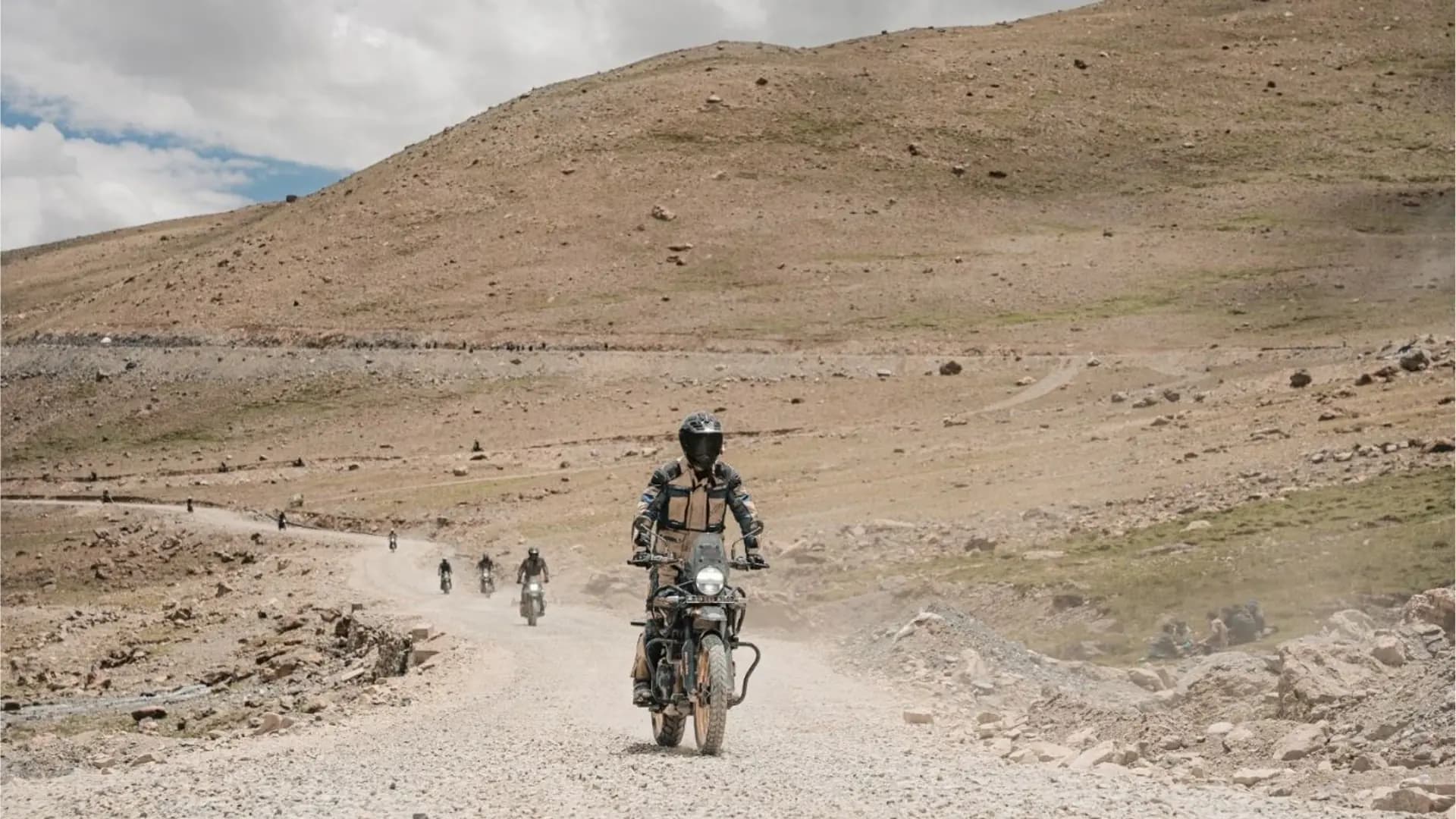
For Offhorizon’s eight-day Ladakh and eleven-day Zanskar-Ladakh tours, we ask for at least one year of motorcycle riding experience in your home area, a valid motorcycle licence and confident control of the bike. Previous off-road experience is not mandatory.
That gives you a starting point. The next question is what your riding actually involves. A regular commute, weekend rides and a recent touring holiday tell us much more than the date you passed your test.
You can come to the Himalayas for the first time without having ridden an expedition before. You should arrive already comfortable riding a motorcycle, with enough attention left to take in unfamiliar roads, changing weather and the landscape around you.
Prepare to ride on the left
India drives on the left, as set out in its official driving regulations. If you normally ride on the right, make this a deliberate part of your preparation.
Pay particular attention when pulling away after a stop or turning at a junction. Check that you are entering the correct side for your direction, and follow road signs and markings. Tell us if this will be your first experience of left-hand traffic so we can discuss it before you arrive.
What beginner friendly means in Ladakh
“Beginner friendly” can be a confusing description of a mountain tour. Someone taking their first motorcycle holiday abroad may be a confident rider at home. Someone who has just learned to use a clutch is in a very different position.
Our eight-day Ladakh motorcycle tour starts and ends in Leh, covering approximately 1,150 kilometres. It is graded moderate and includes tarmac, gravel sections and water crossings.
For this route, beginner friendly means approachable for a confident motorcyclist who is new to this kind of journey. The basic controls should already feel familiar. You need to be able to stop, turn, change gear and manage ordinary traffic without working through every action in your head.
How the Zanskar route changes the demands
The eleven-day Himalayan motorcycle tour through Zanskar and Ladakh covers approximately 1,480 kilometres, with the riding beginning in Manali. Its challenging grade reflects the combination of rougher surfaces, mountain roads, remote stretches and repeated riding days.
Our one-year minimum and confident-riding requirement apply here too. You do not need an off-road background, but gravel, broken road and water crossings will ask more of you than a familiar journey on smooth tarmac. If those surfaces are new to you, tell us before booking so we can discuss the route and useful preparation.
The twenty-three-day Trans Himalayan expedition, at approximately 2,950 kilometres, is a separate undertaking. It calls for previous motorcycle touring experience. Meeting the starting criteria for the shorter tours does not automatically make it the right choice. Our guide to choosing between a Leh start and the route from Manali compares the two journeys.
Five useful checks before you book
These questions help you describe your experience honestly. They are a basis for a conversation, rather than a test that guarantees you a place.
How much have you ridden recently?
Think about the last few months. What bike have you used, how often have you ridden and on what roads? A licence held for ten years can hide a long break. If most of your experience is from several summers ago, get back into regular riding before deciding how ready you feel.
Are you comfortable at low speed?
Consider slow turns, pulling away, stopping on a slope and manoeuvring in a confined space. Can you manage these without feeling that the motorcycle is taking charge? Mountain journeys involve plenty of ordinary, unglamorous movements. Confidence in them leaves you more attention for the road ahead.
Can you brake smoothly and choose a sensible pace?
You should feel comfortable slowing down in a controlled way and leaving room for the unexpected. If braking is something you avoid practising, a session with a qualified instructor is worthwhile. There is no benefit in keeping up with another rider at a pace that makes you uncomfortable.
How do you respond when the surface changes?
Previous off-road experience is optional, but be clear about what you have tried. Have you ridden a gravel access road, encountered loose material or negotiated broken tarmac? If the answer is no, say so. An introductory session with an instructor can make unfamiliar surfaces less intimidating before the trip.
How do you feel after several hours on the bike?
Look beyond your longest single ride. Could you ride again the next morning with your concentration intact? Build up to longer days gradually and try riding on consecutive days. Notice whether your hands, shoulders, seating position or riding gear become a distraction. Deal with those issues while you are still close to home.
When a little preparation makes a big difference
A year’s experience is the minimum we ask for, but the quality and recency of that riding matter. If you ride regularly and your basic control is settled, your preparation may involve longer outings and getting comfortable in your gear.
If you are returning after a break, begin with a refresher course. If slow turns or braking still make you anxious, spend time on those with an instructor before adding unfamiliar terrain. You do not need to turn every practice ride into a challenge.
Both shorter tours use the Royal Enfield Himalayan 450. Tell us what you normally ride and any concerns about managing a different motorcycle. If you can arrange an appropriate familiarisation ride at home, it can help you identify questions about reach, balance and comfort well before departure.
What the support team can help with
On the eleven-day expedition, guides help manage the riding day, a mechanic supports the motorcycles and a backup vehicle carries luggage. That removes practical jobs from your shoulders and gives you people to speak to when something needs attention.
You still need to control your motorcycle and recognise when you need to stop. A supported group does not remove the consequences of poor judgement, fatigue or changing road conditions. Tell the crew early if you are struggling, and be prepared for changes to the day’s plan.
Check the inclusions for your chosen departure rather than assuming every expedition has the same arrangements.
Dressing for changing mountain weather
Prepare for colder air on high passes and warmer conditions in the valleys. Wear layers you can adjust: a comfortable base layer, an insulating layer and a protective outer layer that blocks the wind. Windproof riding gear helps keep cold air from cutting through as you ride.
Add or remove layers when safely stopped, before discomfort becomes a distraction. Keep room for them when checking the fit of your gear. Use layers alongside a proper helmet, protective riding clothing with armour, gloves and riding boots.
Fitness and altitude deserve their own preparation
Fitness matters when you are spending successive days on a motorcycle. Build up your riding stamina before departure and allow time to rest between practice days.
Altitude is a separate issue. The CDC’s high-altitude travel guidance explains that physical fitness does not protect against altitude illness. Review the itinerary with a travel-health clinician, especially if you have a relevant medical condition or a history of altitude problems.
The eight-day Leh programme includes its initial 48-hour acclimatisation period within the package. Starting from Manali offers a more gradual approach, but neither arrangement guarantees that you will avoid altitude illness. Report symptoms promptly; do not push on because you feel you ought to keep up.
For wider preparation, read our first-time visitor’s guide to India. Our Manali-Leh motorcycle tour guide explains the route choices in more detail.
Tell us about your riding before you choose
Tell us what you ride, how often you ride it, your recent longest days and any experience away from smooth roads. Include what makes you uncertain. Those details help us discuss whether the eight-day Ladakh circuit or eleven-day Zanskar-Ladakh journey fits you, and what would be useful to practise first.
Frequently asked questions
Is one year of motorcycle experience enough?
It meets Offhorizon’s minimum experience requirement for the eight-day and eleven-day tours. You also need confident control, a valid motorcycle licence and preparation suited to the chosen route. Time alone does not establish readiness.
Do I need off-road experience for Zanskar?
Previous off-road experience is not mandatory for our eleven-day tour. Tell us if gravel and rough roads are unfamiliar, so we can discuss the demands and preparation before you book.
Can this be my first Himalayan motorcycle trip?
Yes. You can be new to the Himalayas while already being a capable motorcyclist. Choose the route around your current riding experience and comfort, rather than feeling you must choose the longest trip.
What if I have not ridden for a few years?
Return to regular riding and consider a refresher course before booking. An older licence does not tell you how comfortable you will feel on the bike today.
What if I normally ride on the right?
India uses left-hand traffic. Pay special attention after stops and at junctions, follow signs and road markings, and tell the team beforehand that this will be unfamiliar.
Does the support vehicle replace riding experience?
No. It helps with logistics and support, but you remain responsible for controlling your motorcycle. Ask about the arrangements if you need to stop riding during a day.
Does being fit mean I will handle altitude well?
Fitness helps with the physical demands of touring, but it does not prevent altitude illness. Allow for acclimatisation, seek individual medical advice and report symptoms early.