 English
 Français
 Deutsch
 Italiano
 Español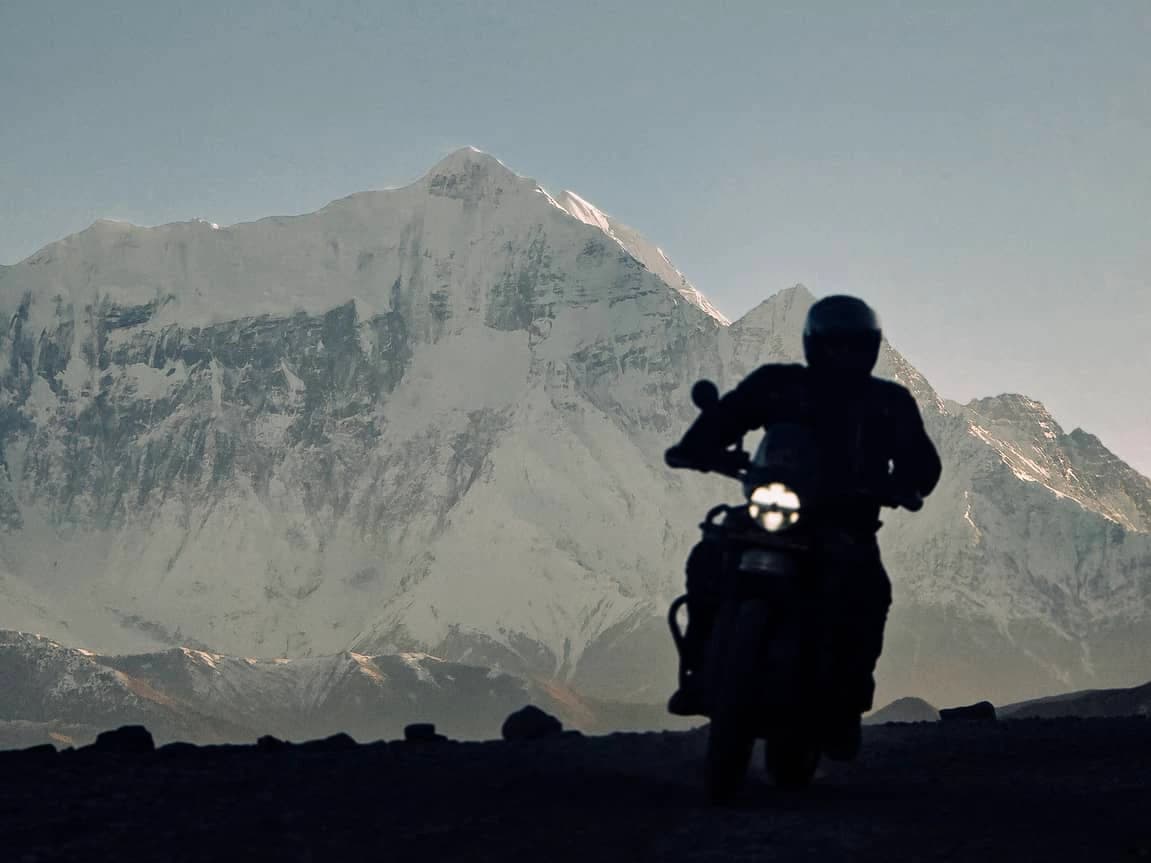
 Nepal
Nepal
Upper Mustang Motorcycle Tour
- 11 days / 10 nights
- ± 1,120 km
- 12 riders
Starting at $3,097 per person
See the tour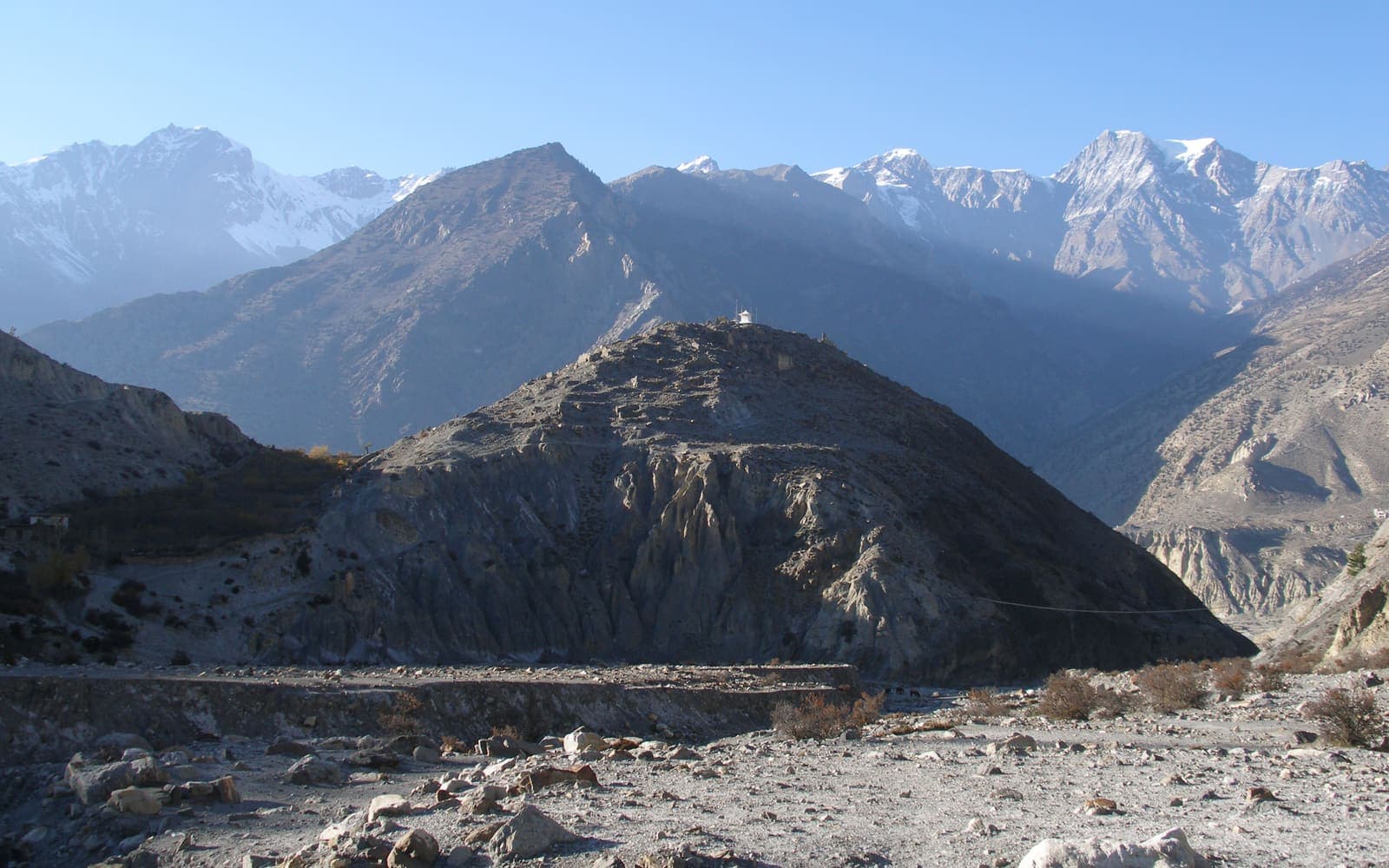
Out of the Kathmandu valley, up the deepest gorge in the world with Annapurna on one side and Dhaulagiri on the other, and into the walled city of Lo Manthang.
Nepal
Starting at $3,097 per person
See the tourThe riding here is not technically the hardest we run, but the altitude gain and the remoteness of Mustang still catch people out. We plan for both.
Years of running groups above 3,000 metres, where the mistakes are unforgiving.
The Upper Mustang restricted area permit is arranged before you arrive, not scrambled for on the day.
An expedition leader, riding guides and a mechanic travelling with the group, not on call.
Time in Kathmandu and Pokhara at the front, so the climb into Mustang is not a shock.
Acclimatisation days, oxygen, first aid, and a rule that the group descends if a rider is not improving.
No overcrowded convoys. No rushed schedules.
Join a scheduled departure, or tell us your dates and we will build the route around them.
Upper Mustang is the northern half of Nepal's Mustang district, a high desert valley that sits behind the main Himalayan range and opens onto the Tibetan Plateau.
It was a separate kingdom, Lo, until 2008, and closed to outsiders until 1992. The culture, the architecture and the language are Tibetan rather than Nepali, and Lo Manthang is still a walled city.
For a rider, it means:
It is the closest thing to riding in Tibet without crossing the border.
The Kali Gandaki river cuts between Annapurna and Dhaulagiri, both over 8,000 metres, and the gap between the peaks and the riverbed makes it the deepest gorge on earth by most measures.
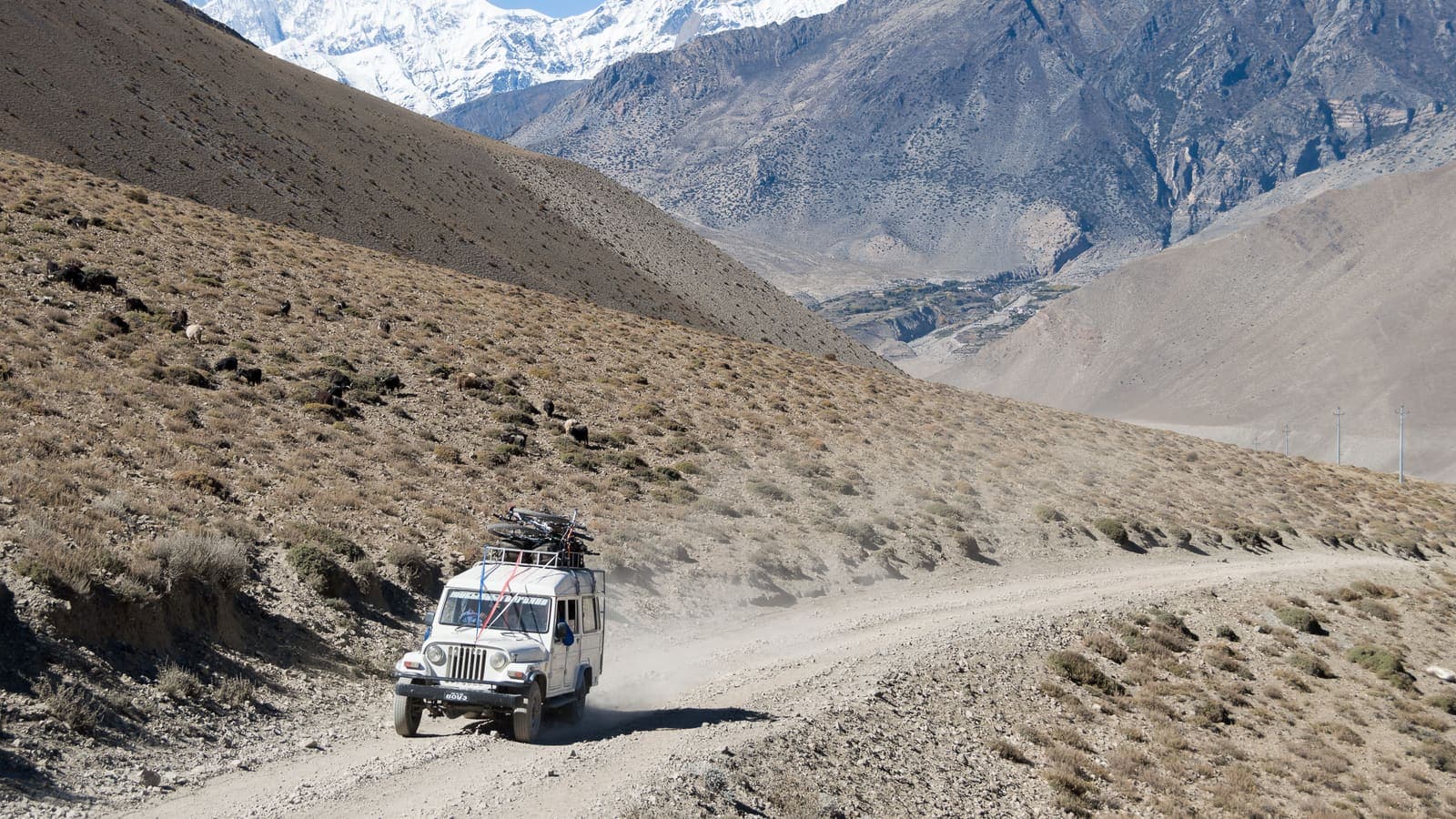
The road follows the riverbed for much of the way. You ride out of forest into desert in a single day, with the two massifs directly overhead.
Moderate. Less technical than Ladakh, but longer on unsealed surfaces.
It suits riders with basic to intermediate off-road experience. The wind is what tires people, not the terrain, which is why the riding day ends early.
Yes, with a properly staffed expedition. The risks are altitude, weather and the state of the road after monsoon, and all three are managed by planning rather than by riding skill.
Every expedition travels with an expedition leader, riding guides, a mechanic and a backup vehicle. We also run:
Mustang is remote. Evacuation from there is by helicopter, which is one reason insurance is not optional.
Yes. It is mandatory, and it must cover:
Check the exclusions on your policy rather than assuming. Helicopter evacuation from Mustang is expensive and uninsured riders have found that out the hard way.
Riders share their journeys on Google and Tripadvisor. Read what they say about the routes, the landscapes and the crew who kept them moving.
Had a fantastic 15-day Ladakh tour which was extended down to Dharmashala, the extra days were a great addition. Going into this with no prior experience of Off Horizon or my fellow adventurers I can only say that it exceeded all my expectations. Bikes were great, lodging and food was as good as could be expected in the locations we visited, and the team was tirelessly friendly and helpful, with a genuine passion for sharing their country and culture.
I have just completed the 11 day Ladakh tour with Offhorizon Adventures. Right from the initial contact the team there were extremely helpful and nothing was to much trouble for them to help with, from flight advise from Ireland, transportation, extra accommodation and even possible medical issues like altitude sickness that might arise. If I thought they were good at this stage ? I was blown away by their level of professionalism and hospitality during my trip. Everyone on the Off Horizon Team made this a trip of a lifetime for me. The bikes were well maintained and in excellent condition, any little tweaks, personal preferences or changes to their set were undertaken to suit all riders. Once on the road and starting our adventure, you always felt safe, their advise and attention to detail made the trip truly unforgettable. My exsperience of off road was “0” but with their help, I got through it and enjoyed every minute. We travelled through some of the most beautiful scenery imaginable with every day bringing something new. The accomadation throughout was just perfect with a mix of first class hotels to small family units in the more isolated locations- considering the Irish pallet and diet the food was great and again the team explained every offering. I’m not going to single out any particular Off Horizon team member because each one of them gave 100% of their professionalism, time, hospitality and kindness to every one on this trip- they limit their numbers, which is great because you get that extra attention and help- I could write pages on what I saw and did during the trip but this is something you are going to have to exsperience yourself. Huge thank you to all the other guys on the trip too and a pleasure to meet you all- I would have no hesitation in recommending Off Horizon if you are planning this trip- thank you so much for a truly fantastic adventure 🇮🇪🇮🇳
Very well organised tour with expert riders, support and backup vehicle. The Offhorizon team new all the routes. Very committed team who took very good care of all of us riding team members, with personal attention. The team left no stone unturned to ensure our entire ride across 2150 kms was exciting, very safe without a single incident. Well paced rides with key halts, refueling stops, zero breakdowns and planned to perfection. I wish this team great succes in the future.
Don't watch or think just pick the phone and book your tour this will be the best place you can have. .. Best Guides, Best Service, Best Bikes.
Great experience! Caring and skilled team, quality bikes, engaging itinerary, good selection of accommodations, endless supply of food and drinks, cultural experiences and a dedicated video/photographer to capture all that. Highly recommended. PS: Surya created an extended 15 day Ladakh and Himachal tour (the original was 11 days) in response to our request. It turned out be much more enjoyable.
Huge thanks to the entire Offhorizon Adventures team for the amazing organization of our tour! We rode an incredible route from Manali through the Zanskar Valley and Kargil all the way to Leh—it was the adventure of a lifetime. I’d like to specifically highlight the team's professional approach: * Bikes and support: The motorcycles were in excellent mechanical condition, fully prepped for high-altitude riding and off-road terrain. You feel safe throughout the entire journey. * Route and logistics: Everything was well-planned, from the initial briefing to stops, accommodation, and meals. The guides know the area perfectly, maintain a comfortable riding pace, and allow time to soak in the fantastic Himalayan views. * Atmosphere: The team is incredibly warm, responsive, and open. They are ready to help, offer advice, and handle any logistical issue at a moment's notice. If you are planning a high-altitude motorcycle tour in Ladakh or Zanskar, I definitely recommend Offhorizon Adventures.
To everyone who has ridden with us: thank you. Your stories are the reason we keep planning the next one.